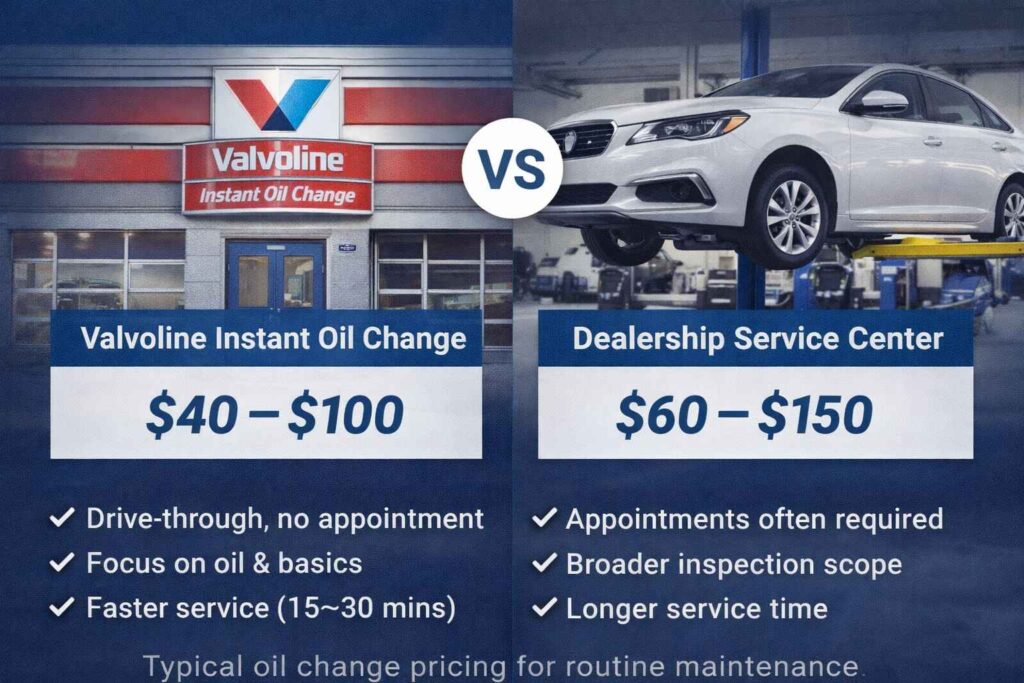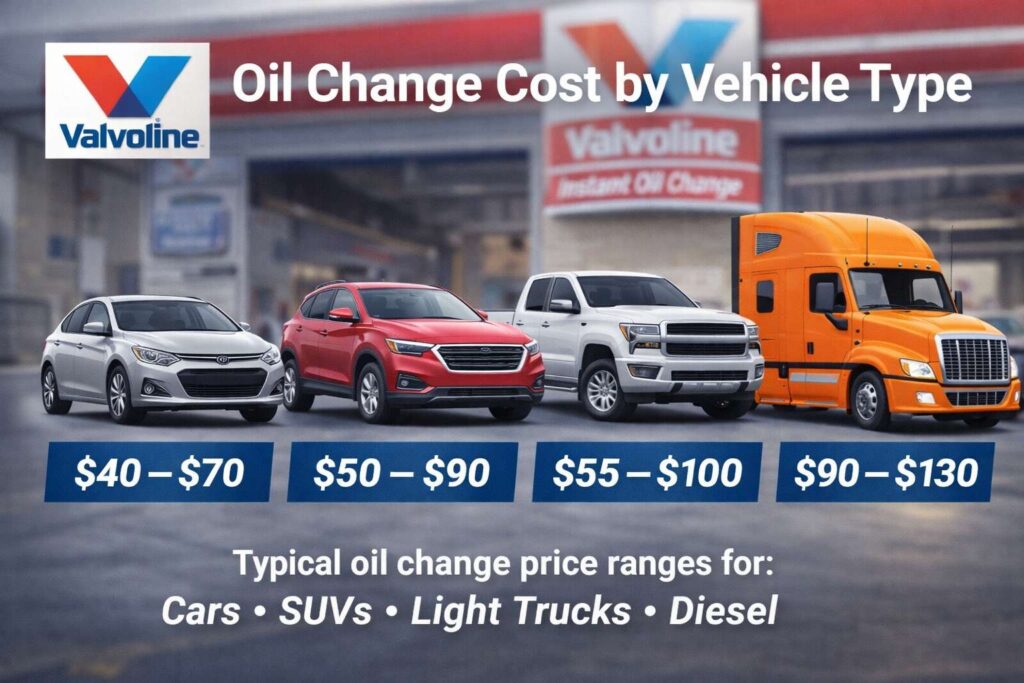
Many drivers wonder how Valvoline oil change cost by engine size differs depending on the vehicle they drive. Engine size impacts not only how much oil a vehicle requires, but also the type of oil and the time needed for service. These variables can lead to noticeable differences in the final cost at Valvoline Instant Oil Change locations.
This page explains how engine size affects oil change pricing, what to expect for common engine categories, and why prices vary even for the same type of service.
Typical Valvoline Oil Change Cost by Engine Size
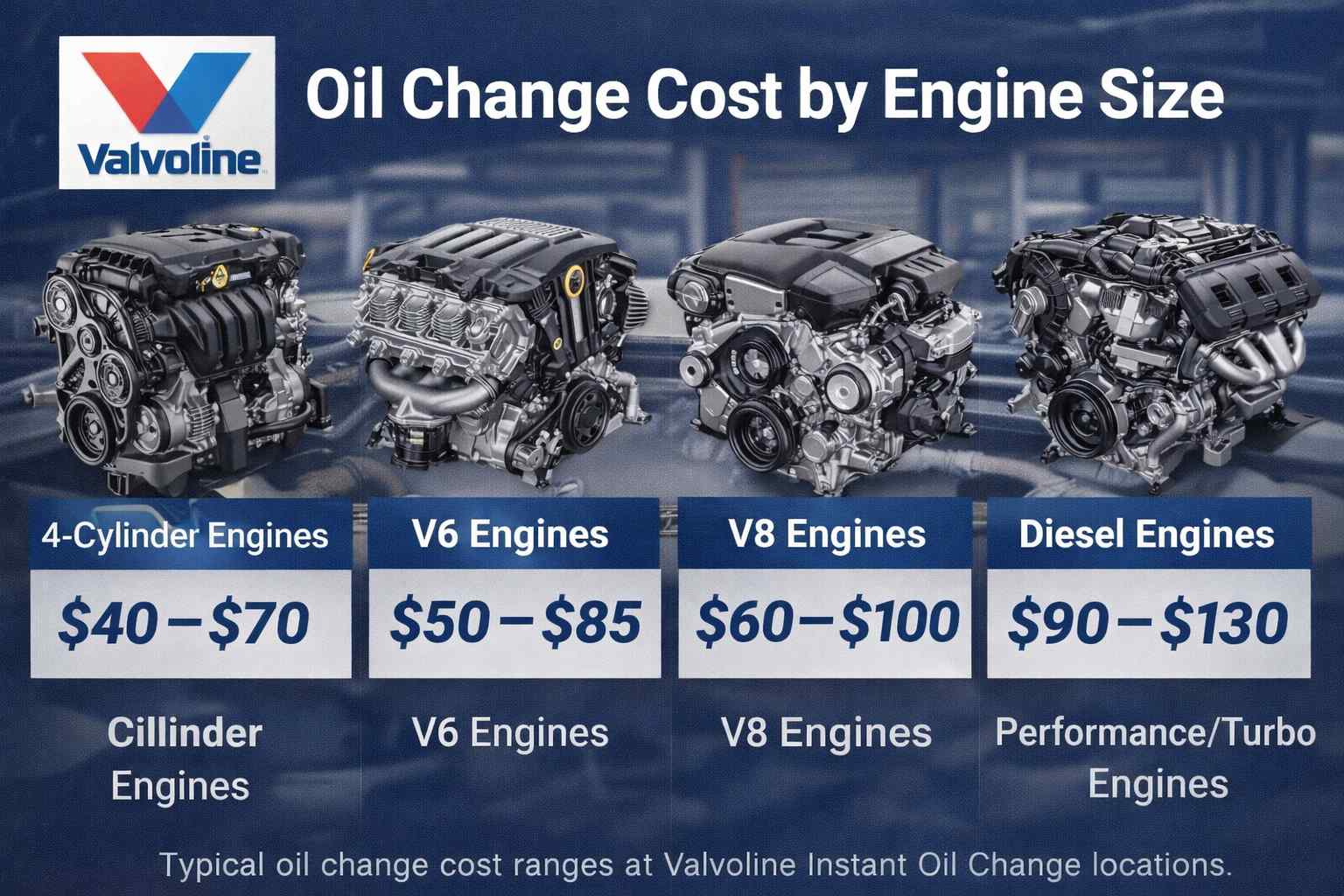
The table below shows estimated cost ranges for Valvoline oil changes based on typical engine sizes. These are general estimates and actual costs may vary based on location, oil type, oil capacity, and other factors.
| Engine Size | Typical Oil Change Cost Range |
|---|---|
| 4-Cylinder Engines | $40 – $70 |
| V6 Engines | $50 – $85 |
| V8 Engines | $60 – $100 |
| Diesel Engines (larger capacity) | $90 – $130 |
| High-Performance / Turbo Engines | $80 – $120 |
Prices shown are general estimates. Actual Valvoline oil change costs may vary based on location, vehicle type, engine oil capacity, and local labor costs. Pricing reflects commonly reported ranges and real-world service conditions rather than guaranteed or advertised rates.
How Engine Size Influences Oil Change Cost
4-Cylinder Engines
Smaller, four-cylinder engines generally require less oil and a smaller filter, which can result in lower oil change costs. Conventional or synthetic blend oil is often used in these engines.
V6 Engines
Vehicles with V6 engines usually have higher oil capacity than four-cylinder vehicles. This added volume of oil increases material costs and can contribute to a moderately higher service price.
V8 Engines
V8 engines commonly require even more oil and often benefit from synthetic or high-performance oils. As a result, V8 oil changes are typically more expensive than those for smaller engines.
Diesel Engines
Diesel engines generally use larger volumes of oil and require specialized diesel motor oils designed to handle the higher compression and soot levels associated with diesel operation. Because of this, diesel oil changes tend to be at the higher end of pricing ranges.
High-Performance and Turbocharged Engines
High-performance or turbocharged engines may require premium oil types and larger oil capacities. Vehicles with these engines often have tighter tolerances and may require higher-grade oil, which can increase the overall cost of service.
Oil Type Still Matters
Engine size is one factor in oil change cost, but the type of oil selected also plays a significant role:
-
Conventional oil – Generally the lowest material cost.
-
Synthetic blend – Blends offer better performance with moderate pricing.
-
Full synthetic – More expensive oil with superior performance and protection.
-
High-mileage – Formulated for older engines; cost depends on vehicle needs.
For example, a V8 requiring full synthetic oil will typically cost more than a V8 using conventional oil.
Location and Labor Influence Cost Too
Even for vehicles with the same engine size, prices can vary across regions due to differences in:
-
Local labor and operating costs
-
State and local taxes
-
Regional oil pricing
-
Service center policies
These factors help explain why identical engine vehicles might receive different quotes at different Valvoline locations.
Location and Labor Influence Cost Too
Even for vehicles with the same engine size, prices can vary across regions due to differences in:
-
Local labor and operating costs
-
State and local taxes
-
Regional oil pricing
-
Service center policies
These factors help explain why identical engine vehicles might receive different quotes at different Valvoline locations.
Frequently Asked Questions
Does engine size affect Valvoline oil change costs?
Yes. Larger engines typically require more oil and often higher-grade oil, which increases the overall service cost.
Are pricing differences only due to engine size?
No. Pricing also depends on oil type, location, labor costs, and vehicle requirements.
Will larger engines always cost more?
Generally, yes, because they require more oil and a larger filter, but the difference can be offset by oil type and regional pricing.
Should engine size determine how often I service my vehicle?
No. Service intervals should follow manufacturer recommendations, not price differences.
Related Pricing Guides
For more detailed pricing information, visit: